Places that restore
Healing Waters
The origin story of the city of Bath is one of myth, religion and ancient engineering. British folklore tells us that Prince Bladud, a legendary king in British mythology, ruled somewhere between 863 BC and 500 BC. He is said to have contracted leprosy while studying in Athens. On his return home, he was banished and worked as a swineherd in Swainswick near Bath. He noticed his pigs were healed of skin diseases whilst wallowing in the warm, bubbling mud, so he tried it himself, and was also cured.
His royal position was restored, and he later became the king of the Britons, credited with founding the city of Bath.
There is no historical record that King Bladud ever existed, but it’s fascinating that if the later date is correct, the timeline of the Celts discovering the healing power of water in Bath, lines up well with when Greece was at the epicentre of ancient healing medicine.
I recently visited one of the main sites of healing in Ancient Greece, the Sanctuary of Asklepios at Epidaurus, just south of Athens in the stunning region of the Peloponnese. What remains today is a huge stone theatre with perfect acoustics that still hosts yearly concerts, and the crumbling ruins of the healing sanctuary.
Ancient doctors deeply understood holistic medicine and the therapeutic benefits of mineral-rich water. Pilgrims flocked far and wide to the sanctuary in the hope of finding a cure for their ailments, and today, stone tablets mark the ‘miracles’ that took place there.
If King Bladud really had been studying in Athens around the 500s BC, he would have learnt about the Greek theories of dream healing and balneotherapy, the medical use of spas.
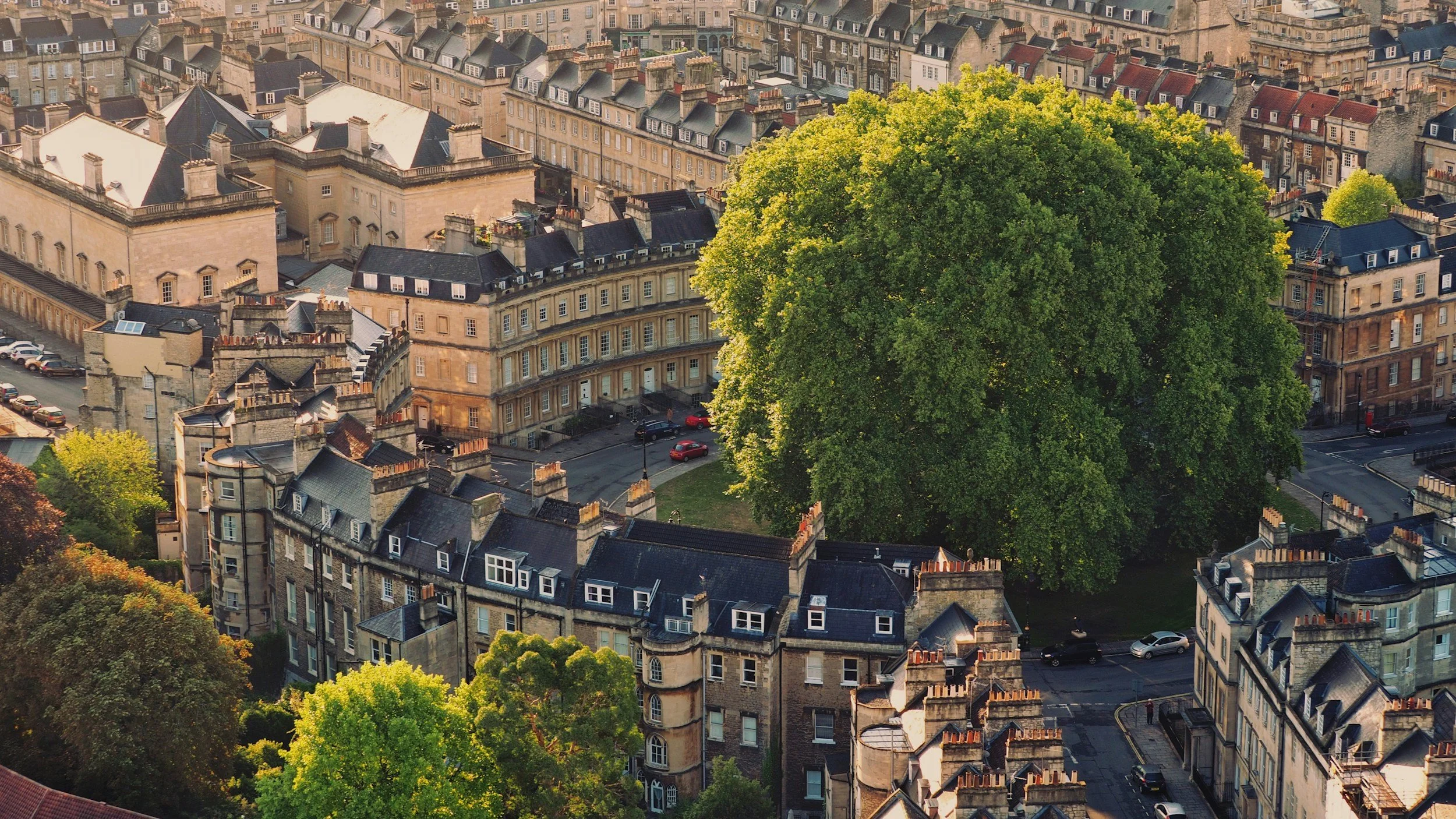
Bath is home to some of the most beautiful architecture in the country, with stunning spa hotels. The Gainsborough Bath Spa has natural hot springs flowing directly into the spa complex, the only hotel in the UK with direct, private access to Bath’s geothermal waters.
I stayed there one chilly winter weekend, made my way down to the spa, through dimly lit stone corridors and was lavished with treatments, steam rooms, cold plunges, and the warm healing waters. I came out feeling rejuvenated, my skin soft like velvet, and after the best night’s sleep I’ve had in a long time, was ready for some Christmas shopping amongst the honey-coloured stone streets.
The story of Bath told today heavily focuses on the Roman invasion, which happened in AD 43 under Emperor Claudius. But the myth of King Bladud remains. In 2008, the city hosted a massive public art event to celebrate the legend, where life-size sculptures of his pigs were placed all over Bath.
Set back from the River Avon with a backdrop of the famous Georgian Pulteney Bridge, you can find a statue of King Bladud today with one of his pigs. A legend of ancient healing that endures.
Every place has a legend. share yours.